CIEEL is for continuing self-evolution, growth, and wisdom — and the work innovations and fulfilment that come of them. Our students, fellows, practitioners, and researchers spend a season or more in the western Himalayan foothills — reading, acting, reflecting, writing what they have seen, and carrying it forward.
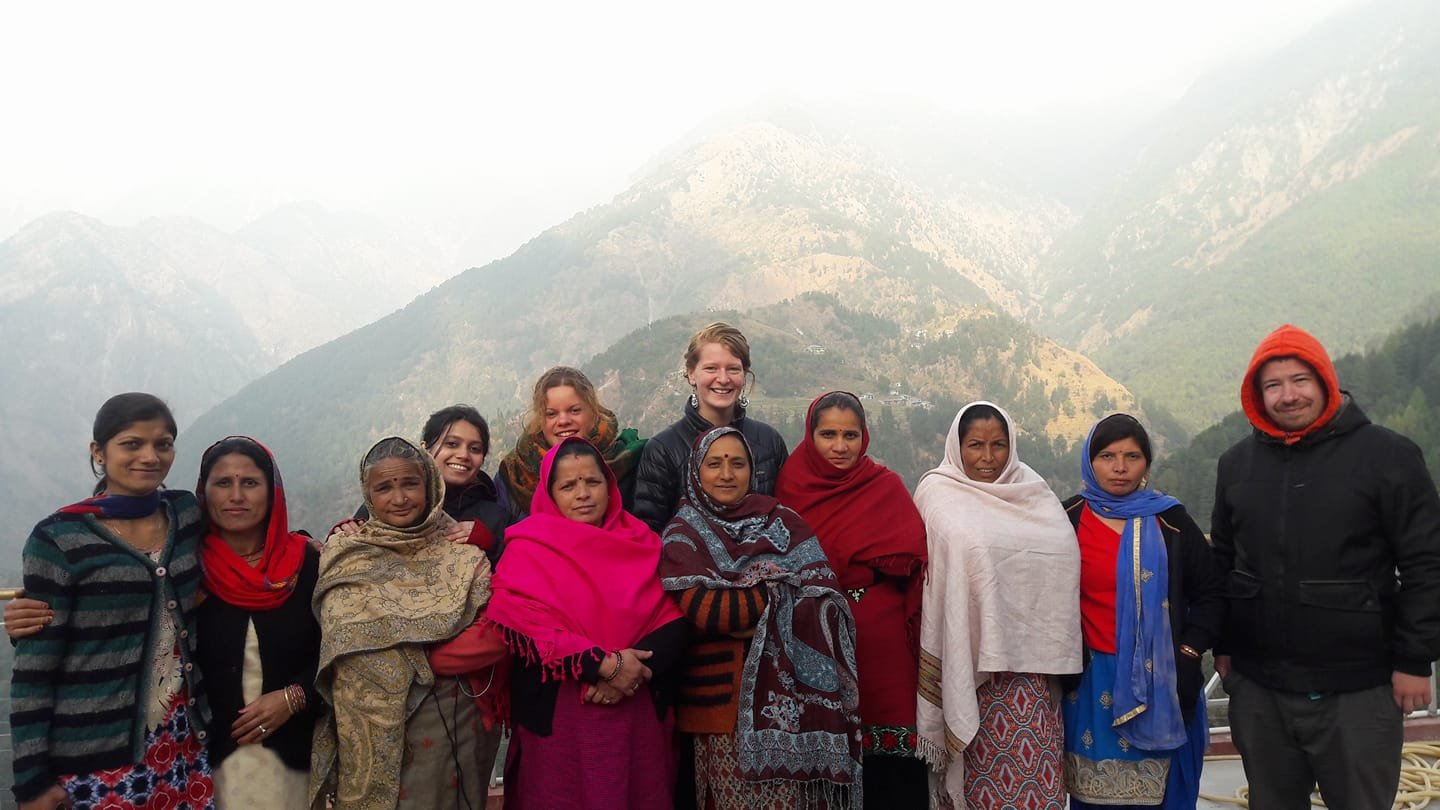
For postgraduates, recent graduates, and working professionals: a structured field practice — from three months to two years — in one of the most consequential development geographies in the world. What you leave with is concrete, citable, and useful long after the cohort disperses.
Selected work from each cohort is reviewed for publication in JiEEL — Journal of International Experiential Education and Learning. A genuine submission and editorial review process, not an internal paper — work that strengthens applications for graduate admissions, doctoral fellowships, and research roles.
Not "international development" in the abstract — specifically: disaster preparedness in mountain communities, public health in low-resource settings, restoration ecology of Himalayan watersheds, geospatial methods for field research, or rural enterprise and skill formation. Twelve weeks of practice-depth in one of them.
Cohorts of fifteen mean faculty actually know your work — your seminar papers, your fieldwork, your closing essay. References arrive with weight, and from people whose names a graduate admissions committee or fellowship panel can verify.
A named, portable methodology for experiential learning, refined over thirty years of field practice. The most durable thing CIEEL gives you — you carry it into your career, your dissertation, your next placement, the work you go on to build.
Faculty, partner organisations across Kangra district, and the cohort you went through it with. Small enough that everyone knows everyone. The network you draw on when you write a dissertation, apply for a fellowship, or design your own programme three years from now.
Experiential learning is not "learning by doing." It is the disciplined movement through five states: knowledge prepared, action taken, reflection allowed to settle, concepts written into form, and the whole carried forward into application. CIEEL teaches in that order, and we hold our students to all five.
Most international programmes stop at the third stage — and many never reach the third at all. We do not. Every CIEEL student writes a fieldwork journal, weekly seminar notes, and one substantial closing paper. And before you leave, we ask the harder question: what will you do with this?
And then again. The five stages are a spiral, not a checklist — each Application becomes the seed of the next round of Knowledge. Through repetition, two things happen at once: the learner evolves, and the work begins to innovate. The two are inseparable — it is the evolved practitioner who makes the better thing.
The KARCA Spiral — Knowledge · Action · Reflection · Conceptualisation · Application. Stewarded by the KARCA Centre of Innovation at CIEEL. Developed since 1994 through field practice in the Himalayan foothills, in dialogue with the experiential learning tradition (Dewey, 1938; Kolb, 1984).
Read first. Concepts, history, the literature of the field, the ground beneath the village.
Then go and do. Two days a week, in a real programme, with people whose lives are not a case study.
Return and think. Not yet write — first sit with what changed, what surprised, what unsettled you.
Then write. The seminar paper, the field essay — where private observation becomes public argument.
Carry it forward. The work does not end at the airport. Apply it — into your career, your country, your next design — and so the next cycle begins.
And then again. Each turn — the learner evolves, the practice deepens, the work innovates. What the previous year could not yet see, this year does. What the previous year could not yet make, this year can.
CIEEL is not a campus institution. It is a node in a working network of grass-roots programmes that have been running in Kangra district since 1994.
Our students do not visit projects. They are seconded to them. Two days a week, every week, for the full term — long enough to be useful, long enough to be changed.
Village-level disaster management plans, training cycles, monsoon-season landslide and flood readiness across thirty-three colleges and the wider Kangra valley.
Embedded engagement with Maple Leaf Hospital, Kangra — maternity and paediatrics, geriatric and palliative care, emergency medicine.
A 4.2-hectare botanical and biodiversity garden under development at Mission Hill — propagation, watershed work, indigenous species reintroduction.
Panchayat-level engagement with skilling programmes, women's collectives, and micro-enterprise development across the district's gram panchayats.
JiEEL publishes essays, photo-essays, and short research papers from CIEEL fellows and the wider experiential education community. Subject areas include experiential pedagogy, work-based internship, service learning, sustainable development, cross-cultural practice, outdoor adventure programming, and the creative arts.
JiEEL was first published 2014–2017, paused during the pandemic, and returns in late 2026 as a New Series under a new editorial board. The original 2014–2017 issues are being reconstructed for archival listing. Submissions for New Series Vol. 1, No. 1 close 30 September 2026.
Four ways into the work in residence at Kangra — plus two doorways for those rooted elsewhere. Each carries CIEEL's full pedagogy: the KARCA Spiral, written reflection, JiEEL publication path. Programme fees reflect what it costs to run an institutionally serious field programme from semi-urban and rural Himachal. Two parallel scholarship instruments make the work accessible — GlobalPEACE for international fellows, EcoDEVA for Indian fellows. Field Fellows receive a monthly research stipend in recognition of fieldwork.
The depth at which the KARCA Spiral first completes a cycle and begins a second — long enough to see your field placement evolve, short enough to fit between graduations and the next stage of life.
Worked example — international fellow under GlobalPEACE
Parallel — Indian fellow under EcoDEVA
The introductory track. Crosses the institutional threshold for fellowship-grade field research. One full KARCA cycle, one course, one closing paper.
A full year. Sits in the same category as CHCI, Bosch, Coro, Avodah — the classic 9–12-month postgrad fellowship — at a fraction of the price. Multiple KARCA cycles, two or three courses, substantial publication.
Pre-doctoral depth. Field research with sustained supervision, JiEEL editorial board engagement, the chance to author book-length work. The most accessible structured 2-year field research opportunity in international postgraduate education.
Some of the people CIEEL has worked with most closely have never lived at Kangra. Senior practitioners with their own institutional bases. Working professionals who couldn't take a year off. Researchers at smaller universities looking for methodological partnership. The KARCA Spiral travels well — it can be applied to your own field, in your own place, as long as the discipline of the cycle is honoured. JiEEL has published distance-fellow work since 2014.
Online engagement with CIEEL faculty. A peer cohort across geographies. The KARCA Spiral applied to your own field. Optional 1-month drop-in residency at Kangra. Closes with a JiEEL paper.
Extended online engagement with multiple KARCA cycles. Methodology mentoring, peer cohort, JiEEL paper development with editorial supervision. Optional 1-2 month drop-in residency at Kangra during the year — for those whose work allows.
The international academic and institutional vehicle of the EduCARE network — a family of organisations operating in safety, health, environment, and rural development across India since 1994. EduCARE International holds the academic partnerships that underpin CIEEL's programmes, and channels two parallel scholarship instruments to participants: GlobalPEACE for international fellows, EcoDEVA for Indian fellows.
EduCARE International's flagship cross-cultural education and peace-building programme. Supports field-based learning exchanges between postgraduate students from the Global North and the field practitioners, communities, and institutions of the Global South. Covers 50% of programme fees for every international fellow. The conviction: peace is built through honest practice in places different from one's own.
For Indian postgraduates, working professionals, and mid-career practitioners, programme fees calibrated to international cost-base would be unaffordable. The EcoDEVA Scholarship of ECODEVA Sansthan — the environment vertical of the RISHEE institute — provides a deeper subsidy for Indian fellows. Covers 75% of programme fees, in recognition of the work fellows do in service of Indian field practice.
Field tracks: May and September. Distance tracks: rolling.
Field Foundation (3 mo) and Field Fellowship (6 mo) accept the September 2026 founding cohort now — followed by full cohorts in May 2027 and September 2027. Field Practitioner (12 mo) and Field Research (24 mo): applications open 2027 for September 2027 starts. Distance Fellowship (6 mo) and Distance Practitioner (12 mo): rolling intake from late 2026.
Postgraduate students & recent graduates.
In social sciences, public health, environmental studies, development practice, or related disciplines. Working professionals welcome — particularly for Distance tracks. Field Research track: completed Master's degree required.
From USD 300 (Distance, Indian fellow under EcoDEVA) to USD 14,400 (Field Research, 24 months).
Field tracks at 50% GlobalPEACE Scholarship for international fellows; 75% EcoDEVA Scholarship for Indian fellows. Flagship 6-month Field Fellowship: USD 3,600 (intl) / USD 1,800 (Indian) + $100/month research stipend. Distance tracks at the same scholarship percentages, no monthly stipend. Full ledger by track on the Tracks page.
CV, statement of purpose, two referees.
Statement of purpose: 500 words on why this method, this place, this term in your life. Referees: one academic, one professional or community. Field Research track: an additional 1,500-word research proposal. Distance tracks: a 750-word note on the field setting your engagement will be rooted in.
