EST. 2011 · KANGRA · HIMACHAL PRADESH · NORTH INDIA
CIEEL Centre for International Experiential Education & Learning
III. Programmes

Six areas of field practice.

The catalogue of work CIEEL students, fellows, practitioners, and researchers engage with — across disaster resilience, public health, environmental restoration, women's livelihoods, geospatial methods, and cross-cultural communication. All six areas accessible across both Field and Distance tracks.

CIEEL fellows do not study a single subject. They commit to a track — three months to two years — and within it, work alongside one of six live institutional programmes that have been running in Kangra district since 1994. The work is real: panchayats hold the disaster-preparedness data, the hospital admits the patients, the watershed needs the trees, the women's collective produces the goods.

The six areas below are where the field practice happens. Each maps onto a working RISHEE programme; each accepts cohort-based Field Fellows and rolling-intake Distance Fellows; each closes with a paper for the JiEEL editorial pathway. Most fellows engage primarily with one area but draw on others as their track unfolds.

i.

Community Resilience & Disaster Risk Reduction

Disaster preparedness programmes across Kangra district — panchayat networks, community surveys, school and ward safety planning

For students of disaster management, social work, public policy, geography, climate adaptation, emergency preparedness, civil engineering, or community-based resilience.
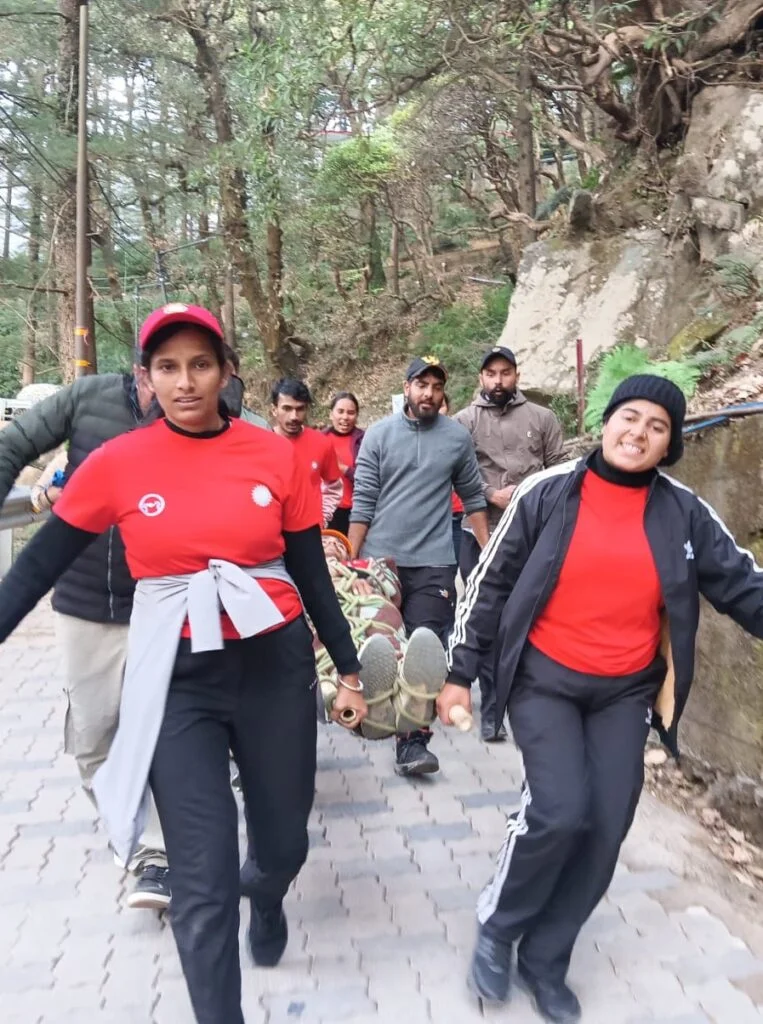
Two AapdaVEER women volunteers leading a stretcher carry up a pine-forested path during an AapdaABHYAS preparedness drill
AapdaABHYAS drill · women-led stretcher carry · Dharamshala foothills

Fellows work with field teams strengthening local preparedness for earthquakes, landslides, floods, fires, road accidents, extreme weather events, and public health emergencies. The work moves disaster risk reduction beyond theory into practical community systems involving local volunteers, panchayats, schools, senior citizens, youth groups, and district-level institutions.

Possible assignments

  • Panchayat-level disaster risk and preparedness surveys
  • Community hazard, vulnerability, and capacity mapping
  • Volunteer mobilisation and training documentation
  • Village-level emergency preparedness checklists
  • School, ward, and community safety planning
  • Training modules, SOPs, IEC material, and awareness tools
  • Documentation of local resilience practices and gaps

What you will leave with

Practical exposure to community-based disaster risk reduction, local preparedness systems, grassroots institutions, and the real challenges of building resilience in Himalayan communities. A paper for the JiEEL editorial pathway, situating your fieldwork in the disaster studies literature.
ii.

GIS, Data & Mountain Risk Mapping

Geospatial work across the district — village mapping, vulnerability assessment, dashboards for field teams

For students of GIS, geography, remote sensing, data science, mapping, environmental risk, disaster preparedness, or rural planning.

Fellows develop map-based and data-supported tools for community resilience, public health outreach, environmental management, and disaster preparedness in the Himalayan region. The work includes mapping vulnerable settlements, local resources, trekking routes, health access points, emergency response assets, water sources, landslide-prone areas, and other community-level risk indicators.

Possible assignments

  • GIS mapping of villages, wards, roads, trails, facilities, and risk zones
  • Household and community-level data collection tools
  • Vulnerability and resource mapping for disaster preparedness
  • Trekking route safety and emergency access mapping
  • Public health and eldercare service mapping
  • Data cleaning, visualisation, dashboards, and map-based reports
  • Decision-support tools for field teams and local institutions

What you will leave with

Experience using data and maps for community decision-making, disaster preparedness, local development planning, and mountain risk reduction. A portfolio of map products and analytical work usable in graduate applications and professional roles.

iii.

Public Health, Ageing & Community Care

Health outreach and eldercare programmes — Maple Leaf Hospital allied health, household assessments, caregiver support

For students of public health, social work, gerontology, nursing, psychology, nutrition, community medicine, development studies, or health communication.

Fellows work with field teams supporting community-based eldercare and health outreach initiatives. The focus is on understanding the needs of older persons, vulnerable households, caregivers, women's groups, and community volunteers — while helping develop practical models for local health support and social care. Especially meaningful for students who want to explore how ageing, loneliness, chronic illness, nutrition, family care, and access to health services interact in rural and semi-rural Himalayan communities.

Possible assignments

  • Senior citizen needs assessment and household visits
  • Documentation of eldercare, nutrition, and social support gaps
  • Community health awareness material
  • Volunteer and caregiver support systems
  • Mapping vulnerable elders and local care resources
  • Designing simple referral and follow-up formats
  • Case studies on ageing, dignity, care, and community support

What you will leave with

Practical exposure to community-based health outreach, eldercare systems, social determinants of health, and the design of low-cost care support models in rural India. A paper developed through JiEEL's editorial review process on a chosen aspect of public health or ageing in mountain communities.

iv.

Women's Livelihoods & Social Enterprise

Self-help group networks, women-led micro-enterprises, panchayat-level collectives

For students of rural management, social entrepreneurship, gender studies, development studies, business, social work, public policy, economics, or sustainability.

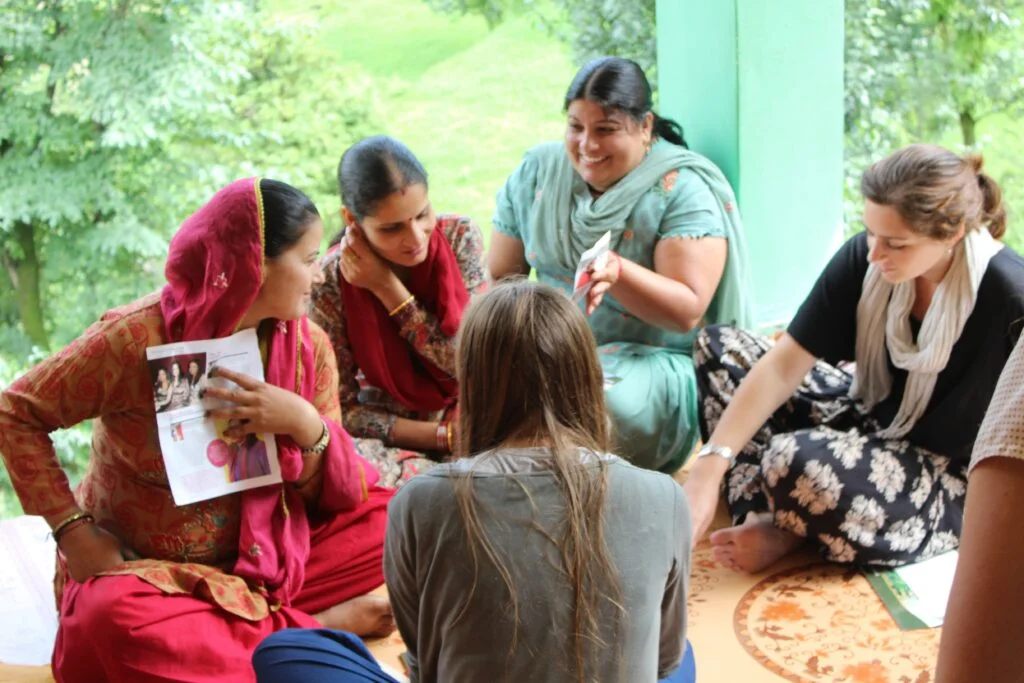
A CIEEL fellow with members of a women's collective at Naddi, sharing printed material during a Self-Help Group session
Women's SHG session · Naddi village · Kangra

Fellows support initiatives that explore how women's groups, youth entrepreneurs, community volunteers, and local institutions can develop sustainable livelihood models linked to care services, environmental action, disaster preparedness, local products, training services, and village-level enterprise systems. The work connects grassroots entrepreneurship with dignity, skills, income generation, community service, and local resilience.

Possible assignments

  • SHG-based livelihood and enterprise mapping
  • Market assessment for community-based products and services
  • Business model development for care, safety, environment, and local services
  • Documentation of women-led social enterprise opportunities
  • Training material for SHGs and community entrepreneurs
  • Field interviews with women, youth, volunteers, and local institutions
  • Case studies on livelihood, leadership, and local enterprise models

What you will leave with

Practical exposure to grassroots enterprise development, SHG ecosystems, women's leadership, rural markets, and social business models designed for community impact. A paper developed through JiEEL's editorial review process on a chosen aspect of livelihoods or social enterprise.

v.

Environmental Health & Regenerative Villages

Mission Hill biodiversity garden, watershed restoration, village waste systems, school environmental education

For students of environmental science, sustainability, public health, forestry, ecology, rural development, climate studies, social work, or education.

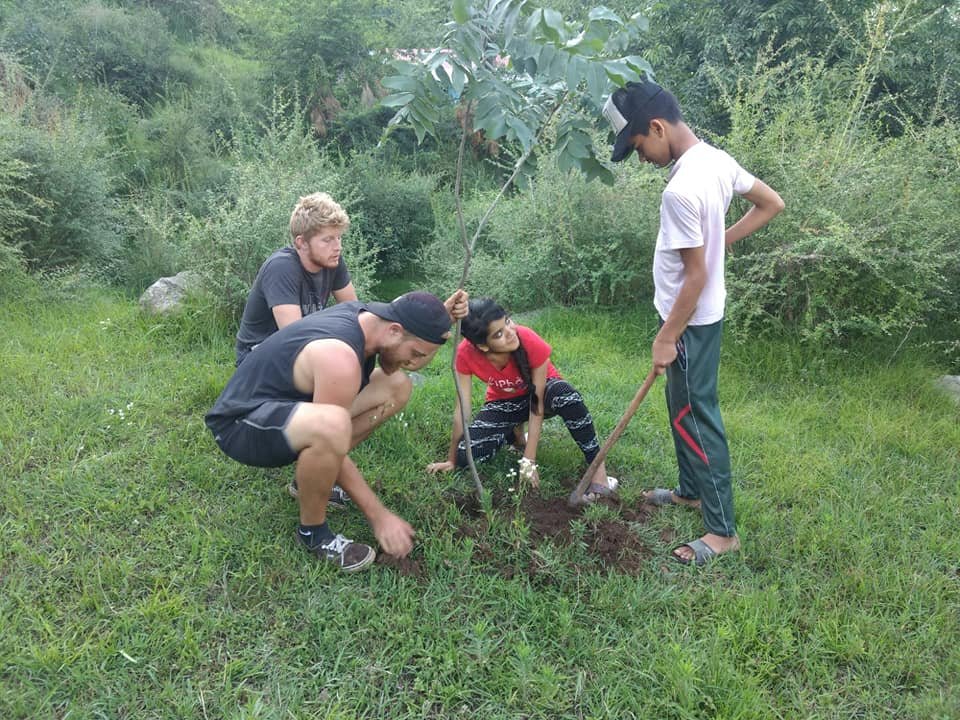
An international fellow and Indian youth planting a tree together on a Kangra hillside in golden afternoon light
Eco-restoration fieldwork · Kangra hillside · CIEEL × ECODEVA

Fellows support field initiatives that promote healthier village environments through practical systems for waste segregation, water awareness, local biodiversity conservation, eco-restoration, community gardens, environmental education, and nature-responsive development. The track is especially suitable for students who want to work at the intersection of environment, health, behaviour change, local governance, and social entrepreneurship.

Possible assignments

  • Village environmental health surveys
  • Waste segregation and non-biodegradable waste management models
  • Sanitation of water, air, and soil for healthy villages
  • Community biodiversity and botanical garden documentation
  • School and community environmental education activities
  • Eco-restoration and local resource mapping
  • IEC material, field reports, and environmental action plans

What you will leave with

Field exposure to community-led environmental action, regenerative village systems, ecological awareness, and practical sustainability models in Himalayan communities. A paper developed through JiEEL's editorial review process on environmental health or regenerative practice.

vi.

Communications, Documentation & Global Learning

Cross-cutting; JiEEL editorial; documentation across all field sites

For students of journalism, communication, media studies, liberal arts, international relations, education, development studies, English, design, or social sciences.

Fellows document grassroots initiatives, community stories, field learnings, volunteer experiences, local innovations, and programme impact across CIEEL's field projects. The role combines writing, field observation, interviews, visual documentation, newsletter development, social media content, case studies, and learning material preparation. Especially suitable for students who want to use communication as a tool for social change, public education, volunteer mobilisation, and international learning.

Possible assignments

  • Field stories and case studies
  • Interviews with volunteers, elders, women's groups, youth, and community leaders
  • Photo documentation and short video storyboarding
  • Website, newsletter, blog, and social media content
  • Bilingual IEC material and awareness campaigns
  • Outreach material for Indian and international students
  • Documentation of lessons learned from field programmes

What you will leave with

Practical experience in nonprofit communication, field documentation, social impact storytelling, and intercultural learning in a live grassroots development setting. A paper or extended documentary piece developed through JiEEL's editorial review process on a chosen field engagement.

E.
Who We Are Looking For

Across all six areas, we welcome fellows who are…

  • Genuinely interested in grassroots field learning
  • Comfortable working in rural and semi-rural community settings
  • Respectful toward local culture, elders, women's groups, youth, and field workers
  • Willing to learn through observation, documentation, participation, and reflection
  • Able to work independently as well as with a small field team
  • Open to simple living conditions and real-world field challenges
  • Interested in producing useful outputs — reports, maps, case studies, IEC material, databases, project plans

Prior experience is welcome but not always required. A sincere attitude, learning orientation, and commitment to community work matter more.